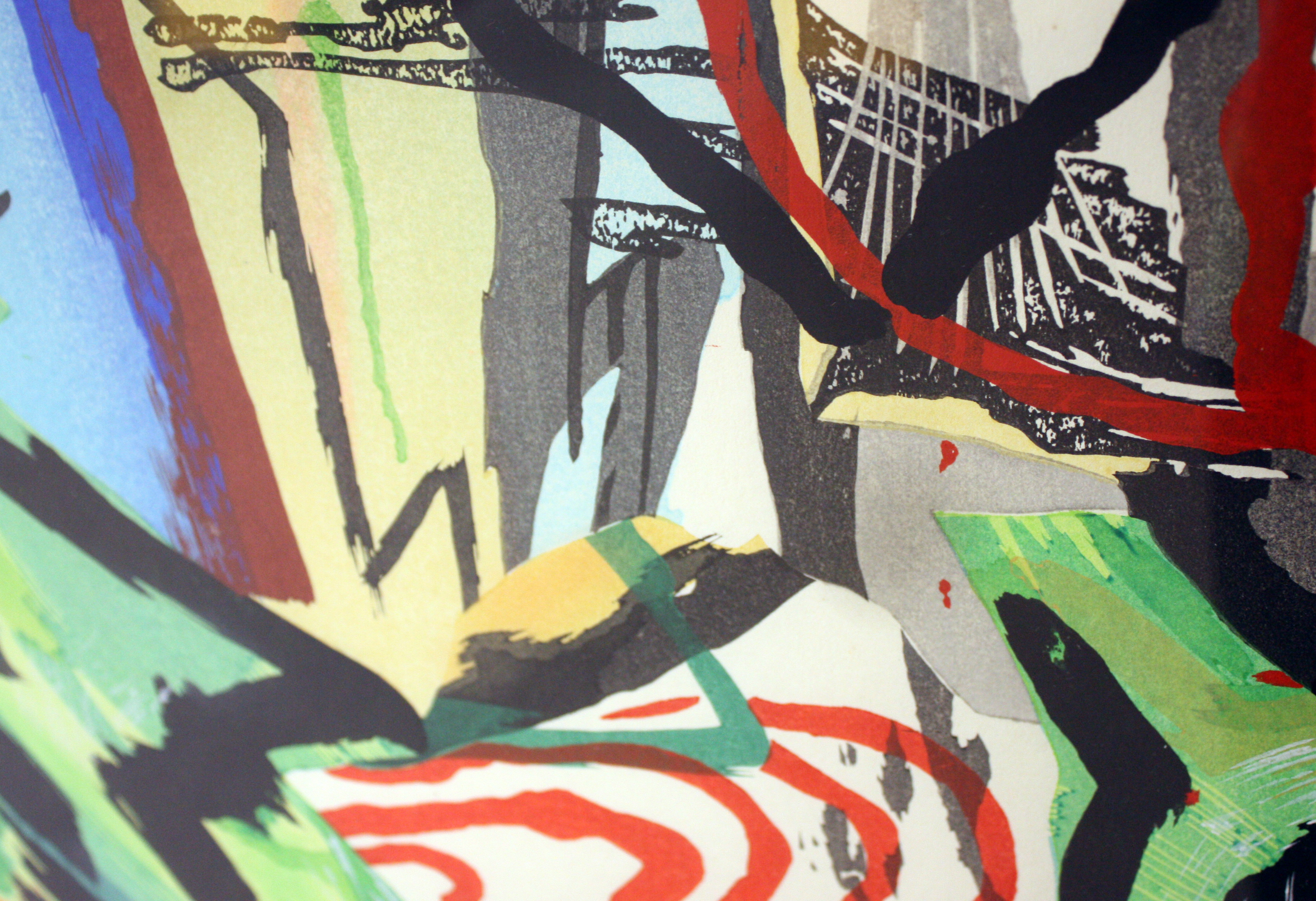
Woodcut as a Relief Process
Woodcut is among the oldest forms of printmaking and remains one of the most direct. A design is carved into the surface of a wooden block; the raised areas are inked with a roller and pressed onto paper, transferring the image. Like linocut, woodcut is a relief process — ink comes from the raised, uncut surface. Unlike lino, wood has distinct grain direction and species-specific hardness, both of which affect how the block cuts and how the resulting print looks.
The grain of the wood is not merely a structural property — it is a visual and tactile element of the printed image. Experienced woodcut printmakers work with the grain rather than against it, designing compositions that incorporate the directional character of the wood surface.
Side-Grain vs. End-Grain
Two distinct types of woodblock are used in printmaking, and they behave very differently:
- Side-grain (plank) wood — the block is cut parallel to the growth rings, showing the characteristic flowing grain pattern. Gouges and chisels cut easily along the grain but resist cutting across it. This type is used for woodcut.
- End-grain wood — the block is cut across the growth rings, showing a cross-section of the wood structure. End-grain is much harder and resists all cutting directions equally. Fine lines, stipple work, and cross-hatched tone are possible on end-grain. This type is used for wood engraving, not woodcut.
The discussion in this article focuses on side-grain woodcut, which is the common hand-printing technique in studio settings. Wood engraving on end-grain requires specialist tools (burins rather than gouges) and finer-grained hardwoods.
Wood Species Selection
The ideal wood for woodcut is close-grained, stable, and neither too hard nor too soft. Commonly used species include:
Cherry (Prunus serotina / Prunus avium)
Fine, even grain. Widely regarded as one of the best woods for woodcut. Takes both fine line work and broad area carving cleanly. Available from specialist woodworking suppliers in Poland; harder to find at general timber merchants.
Pear (Pyrus communis)
Very fine, uniform grain with minimal figure. One of the traditional European choices for fine woodcut and wood engraving. Harder than cherry. Available from specialty timber suppliers.
Birch Plywood
Multi-layered birch ply (Baltic birch) is widely available in Poland and provides a stable, flat surface resistant to warping. The surface veneer layer is thin; deep cuts may breach it and expose inner plies. Useful for large-format work and available from building supply stores (e.g., Castorama, Leroy Merlin). The grain of the surface veneer is less pronounced than solid wood, making for a slightly more neutral surface character.
Linden / Basswood (Tilia)
Soft, easily carved, and widely available. Often used in carving instruction. The softness makes it fast to cut but it tears more easily on fine details than harder fruitwoods. A practical starting point for woodcut.
Block Preparation
Surfacing the Block
The block surface must be flat and smooth before carving or ink application. Sand through progressive grits (80, 120, 220) parallel to the grain. Finish with a light pass of 320-grit to close the grain. Remove all sanding dust with a tack cloth or compressed air. A rough surface creates irregular ink transfer and leaves marks in the printed image that are difficult to distinguish from intentional marks.
Block Thickness and Mounting
For press printing, block thickness must match the type height standard if using a letterpress (23 mm in the UK tradition; 25.5 mm in European type height). For hand printing or modern relief presses, any thickness is workable. Blocks thinner than 12 mm may flex under pressure and produce uneven ink transfer. If using thin planks or veneer panels, mount them on MDF or plywood backing with PVA adhesive.
Design Transfer
Drawing on the Block
As with linocut, the image on the block is a mirror of the final print. Soft pencil works directly on sealed or unfinished wood. For a more permanent drawing guide, dilute a small amount of white watercolour paint with water and paint the block surface — this provides a white ground against which pencil or marker is clearly visible. Carbon paper transfer works as described for linocut, with heavier hand pressure to transfer lines onto the harder surface.
Cutting the Block
Tool Selection for Woodcut
Standard woodcut gouges are larger and heavier than lino tools and are designed for use with a mallet or with direct hand pressure. Key profiles include: flat chisel (establishing edges of design areas), V-tool or parting tool (line drawing, outlining), No. 3 shallow sweep gouge (clearing broad areas close to the design), No. 5–7 medium sweep gouge (clearing open areas quickly). Japanese woodblock tools (hangi-to knives) are also widely available and suitable for fine line work.
Cutting with the Grain
The wood splits more easily parallel to the grain than across it. Always cut lines that run across the grain by first establishing both sides of the line with the V-tool before clearing between them; this prevents the wood from splitting beyond the intended cut. Cuts running parallel to the grain can be made with less risk of tear-out. When clearing large areas, make initial relief cuts at the boundary of the design before removing material from the centre.
Tool Sharpness
A sharp tool cuts cleanly and requires less force; a dull tool tears the wood fibres and produces ragged edges in the printed line. Keep a sharpening stone or honing guide at the work surface and touch up edges every 10–15 minutes of active cutting. Japanese waterstones (1000/6000 combination) are suitable for woodcut tools. Strop on leather before use.
Inking and Printing
Ink for Woodblock
Oil-based relief ink is standard for edition printing. It dries by oxidation and requires press wash-up solvents. Water-based relief inks are suitable for short runs and workshop situations where solvent use is restricted. Ink viscosity for woodblock is slightly stiffer than for linocut, as wood absorbs less ink. Adjust with stiffening compound if the ink appears too fluid on the block.
Inking and Proofing
Roll a thin, even layer of ink across the block, working in multiple directions. Take an initial proof by laying paper over the inked block and applying firm hand pressure or using a baren. Inspect the proof for even coverage, adequate depth of print, and any tool marks that require modification. Adjust roller loading and pass count before proceeding to edition printing.
Multi-Block Colour Registration
Colour woodblock printing uses one block per colour, printed in sequence. Registration ensures each colour aligns precisely with those already printed. The following methods are in common use:
- Corner tab registration: Cut tabs of card or folded paper taped to the press bed at two adjacent corners of the block position. Paper sheets are placed against the tabs before printing on each colour block.
- Kento registration (Japanese method): Two L-shaped or straight marks carved directly into the block at a specific corner and adjacent edge. The paper is positioned against these marks by feel. This method requires each block to carry the same kento marks at the same position.
- Acetate overlay: Print one colour on an acetate sheet; tape the acetate to a fixed registration point. Use the acetate as a guide to position subsequent blocks for alignment. Suitable for proving registration before an edition is run.
Paper and Dampening
Kozo (mulberry bark paper) and other Asian papers traditionally used with woodblock absorb oil-based ink well without dampening. European mould-made papers (Zerkall, Hahnemühle) work reliably with both oil and water-based inks and may benefit from light dampening. Dampening increases ink absorption and improves the sharpness of fine lines in the print.
References
- Ficke, Arthur Davison. Chats on Japanese Prints. Fisher Unwin, 1915. (Public domain; reprinted extensively.)
- Wikipedia contributors. Woodcut. Wikipedia, The Free Encyclopedia.
- Crown Point Press. crownpoint.com. San Francisco.